

Best marine water hose: how to choose a compact, drinking water safe hose for your boat
August 5, 2026
The hose you use at the marina must handle more than a typical backyard garden hose. It may be dragged across concrete, fiberglass, teak, gravel, and sun-baked docks. It must fit inside a crowded cockpit locker or lazarette. Most importantly, if you use it to fill your freshwater tank, it must be suitable for drinking water.
The best marine hose is not simply a garden hose with a nautical label. It is a mobile water-delivery tool designed for compact storage, repeated connections, rough surfaces, changing weather, and life in limited spaces.
The 7 features that define the best marine hose
These seven features separate a dependable marine drinking water hose from an ordinary hose.
-
Drinking water safe materials
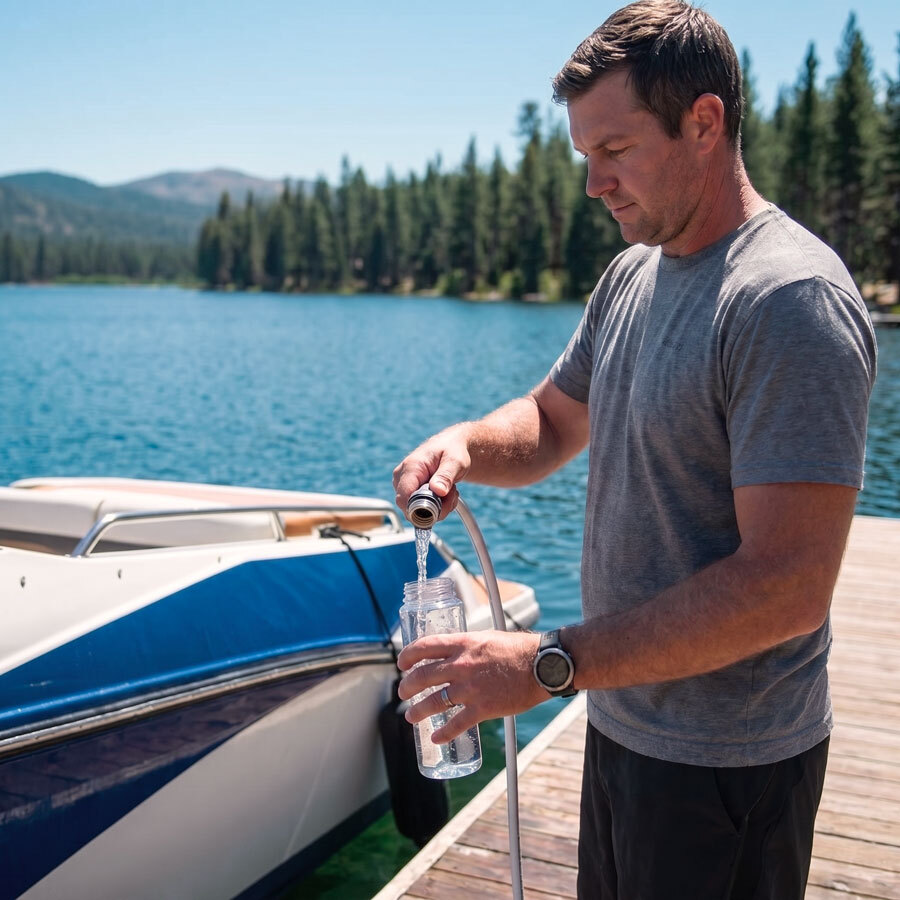
If a hose will be used for filling a freshwater tank, rinsing food-preparation equipment, or supplying an onboard potable water system, material safety comes first.
There is also a practical habit worth adopting: keep your freshwater hose dedicated to clean-water tasks.
Do not use the same hose for bilge work, engine flushing, black-water maintenance, or questionable dock connections.
Before connecting at a marina hookup, let the dockside water run briefly. This clears standing water from the faucet and gives you a chance to check for discoloration, unusual odor, or excessive heat before directing it toward your boat freshwater system.
-
Flat-to-round technology explained
Not all compact hoses work the same way.
During use
When pressurized, the Yunigo Getaway opens into a round cross-section. This helps maintain a stable internal passage so water can move through the hose without the severe restriction associated with a flattened or folded channel.
That means:
- More consistent flow
- Faster freshwater tank filling
- Fewer interruptions caused by collapsed sections
- Easier rinsing and general dockside use
Not crushing while water is running is how the hose is intended to be used.
It becomes round, functional, and familiar in the hand—closer to the working shape of a traditional flexible marine hose.
After use
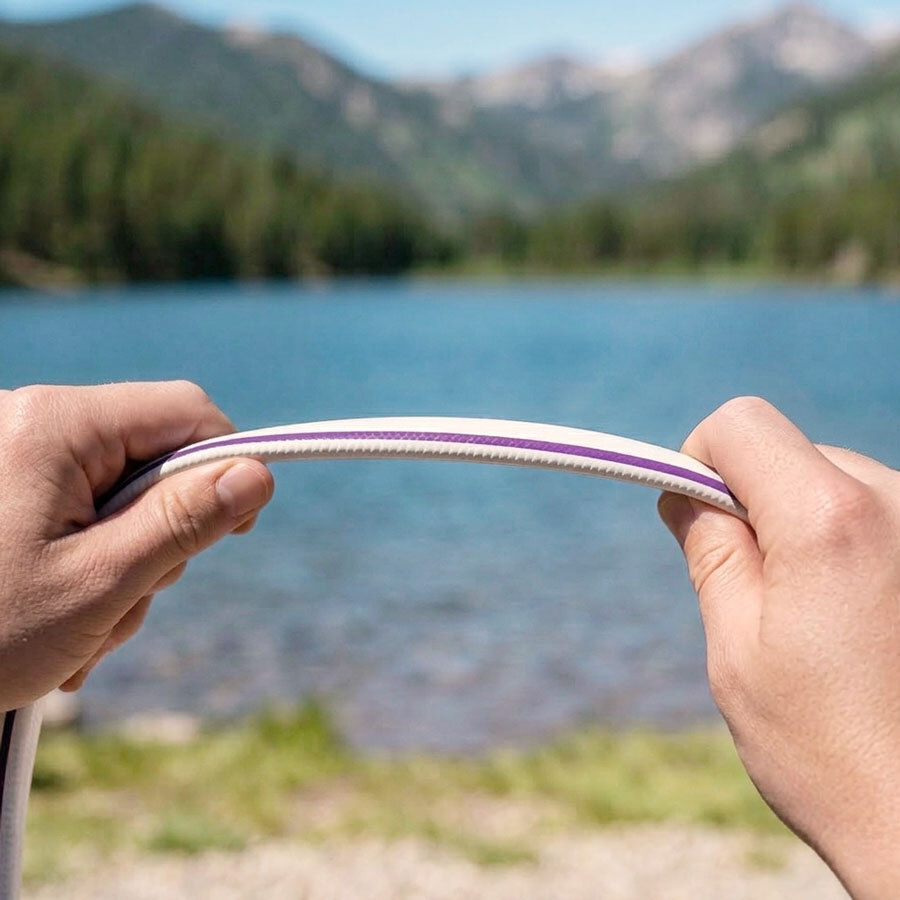
Once the water is shut off and the hose is fully drained, the structure flattens again.
That flattened profile makes the hose easier to roll, fold, secure, and store. Instead of fighting a thick circular coil, you are packing a much slimmer piece of equipment.
-
Compact storage
Storage space on a boat is measured differently.
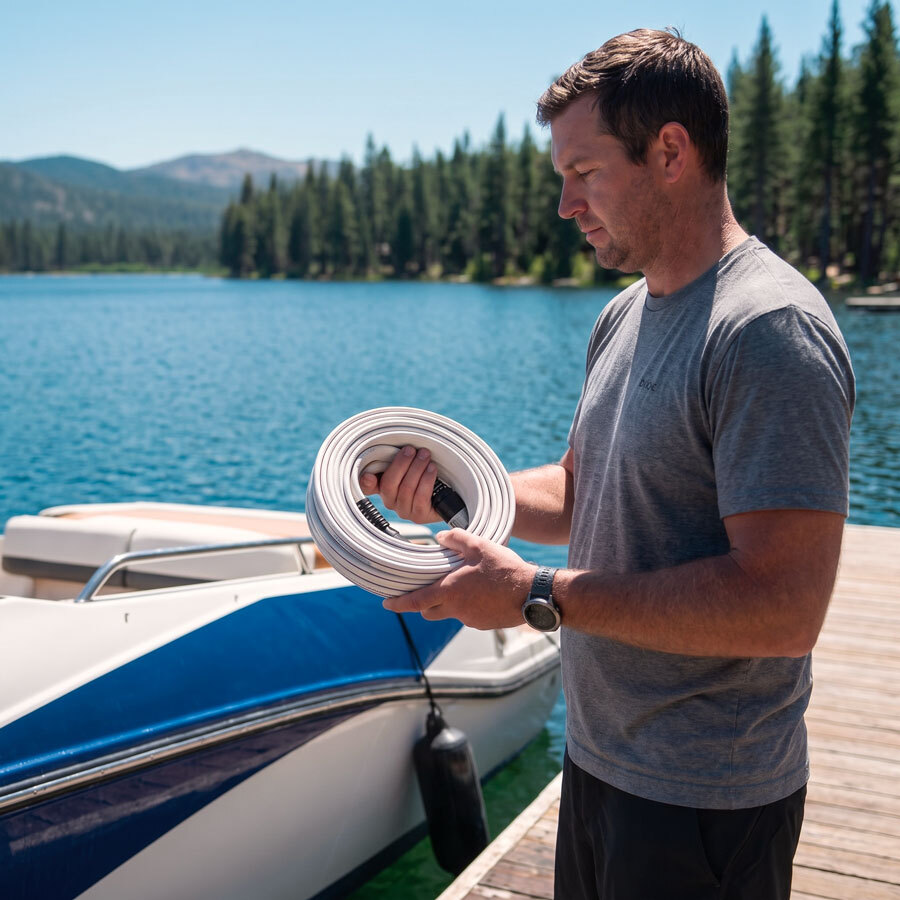
A compact marine hose like Yunigo Getaway should:
- Pack into a small footprint
- Be easy to carry through narrow spaces
- Fit inside a cockpit locker, cabin compartment, or storage bag
- Remain manageable after repeated use
- Avoid turning into a rigid, uneven coil
-
Kink resistance
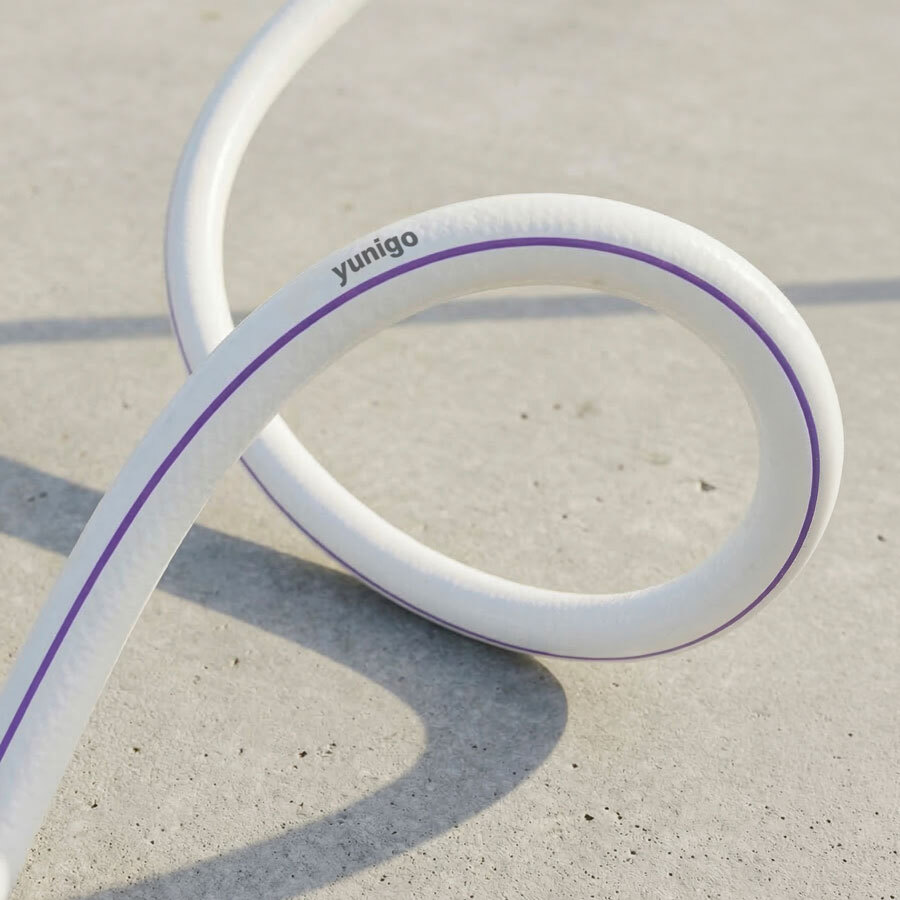
A kink resistant marine hose should remain flexible as it moves around corners, cleats, boarding steps, dock boxes, and cockpit edges.
The best anti-kink performance comes from a combination of factors:
- Flexible hose construction
- Balanced wall strength
- Proper internal support
- Quality fittings
- Correct handling and storage
There is also a durability benefit. Repeatedly bending the same point can weaken the hose over time. Fewer severe kinks generally mean less concentrated stress and a longer working life.
-
Abrasion resistance
Abrasion resistance helps protect the hose from:
- Scuffing
- Fraying
- Surface cuts
- Premature wall damage
- Weak spots near high-contact areas
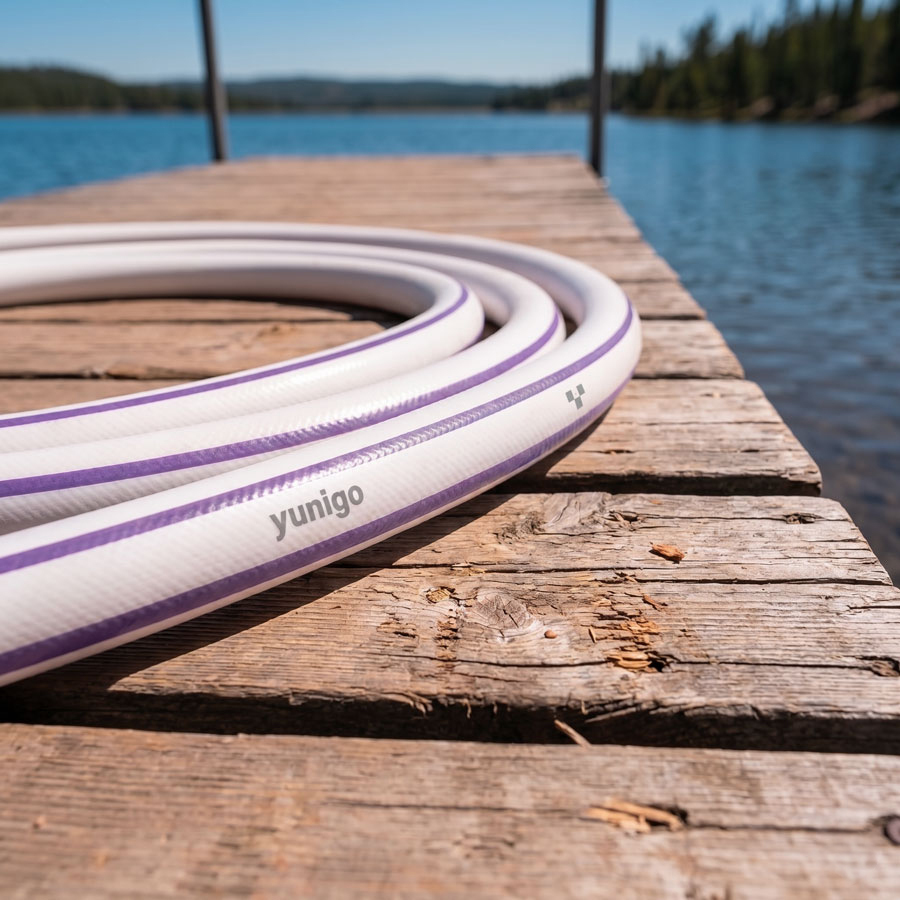
Salt also changes the equation. Dried salt crystals can feel surprisingly abrasive, especially when trapped between a hose and a rough deck. After exposure to saltwater spray, a quick freshwater rinse can help protect the hose surface and fittings.
-
Lightweight design
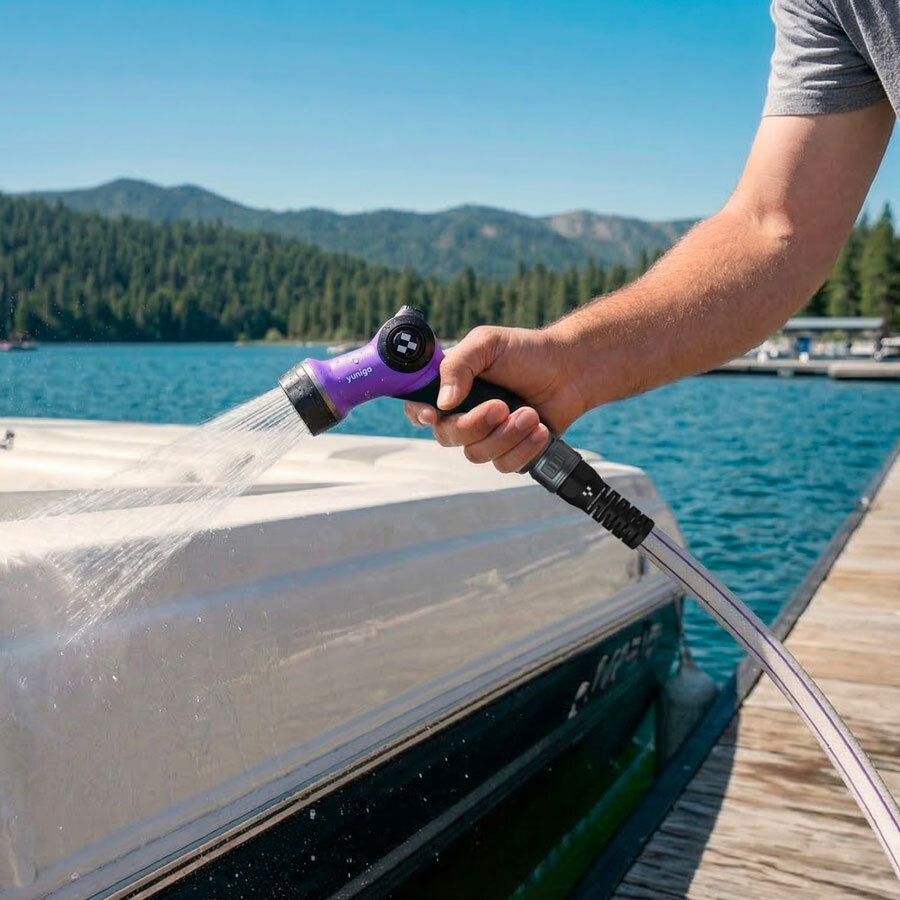
A lightweight marine hose like Yunigo Getaway is easier to carry from the vehicle to the dock, easier to pass between people, easier to coil, and less tiring to handle when cruising alone.
A conventional hose may not feel particularly heavy when dry. Add retained water, awkward coils, wet fittings, and a long walk down the dock, and the difference becomes obvious.
Lower weight is especially useful for:
- Solo boaters
- Older boat owners
- People with limited hand or shoulder strength
- Tenders and small craft
- RV and marine travel
- Frequent marina changes
- Anyone carrying multiple shore-side connections at once
-
Right length: 25 ft or 50 ft
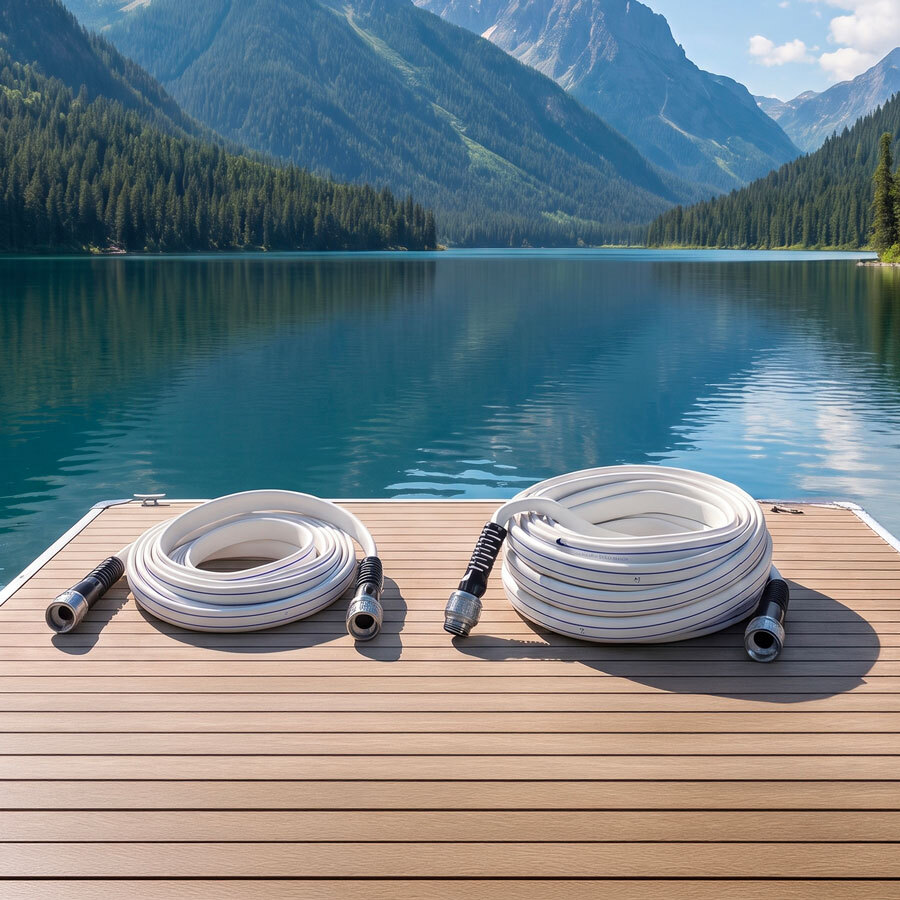
Choosing between Yungio Getaway marine hose 25 ft long and 50 ft long depends less on boat size than many people assume.
The real question is: how far will the connection point be from your fill port?
When a 25 ft marine hose makes sense
A 25-foot hose is often ideal for:
- Tenders
- Day boats
- Small slips
- Compact marina hookups
- Short dockside connections
- Boats with freshwater fills near the boarding area
- Owners who prioritize the smallest possible storage
When a 50 ft marine hose makes sense
A 50-foot hose offers more flexibility for:
- Larger marinas
- Long finger piers
- Unpredictable dock layouts
- Boats with fill ports farther from the stern
- Transient slips
- RV hookups
- Campsites and travel use
The additional reach can prevent the frustrating discovery that the faucet is five feet beyond your hose.
A compact 50-foot hose can be particularly valuable because it provides useful range without the storage penalty of a traditional full-size coil.
For boaters who regularly visit unfamiliar marinas, 50 feet is often the safer all-around choice. For local day use with a predictable dockside water connection, 25 feet may be the cleaner and more efficient setup.
How to store your Yunigo Getaway marine hose properly
Even the best marine water hose will last longer when stored correctly.
- Shut off the water at the source
- Disconnect the boat end
- Drain the hose completely
- Let the surface dry
- Avoid tight bends
- Secure it neatly
- Store it away from chemicals and contamination
Quick buying checklist for a marine drinking water hose
Before choosing a hose, check the following:
- Is it explicitly suitable for potable water?
- Are the fittings lead-free?
- Will it fit inside your available boat storage?
- Does it maintain a round shape during use?
- Is it kink resistant?
- Can the exterior tolerate abrasion from docks and decks?
- Is it lightweight enough for frequent handling?
- Does it drain completely?
- Are the hose fittings secure and easy to connect?
- Do you need 25 feet or 50 feet of reach?
- Can it also serve your RV, camper, or travel setup?
The best marine hose is the one that performs reliably without demanding extra space, effort, or attention.
A better hose changes more than the water flow
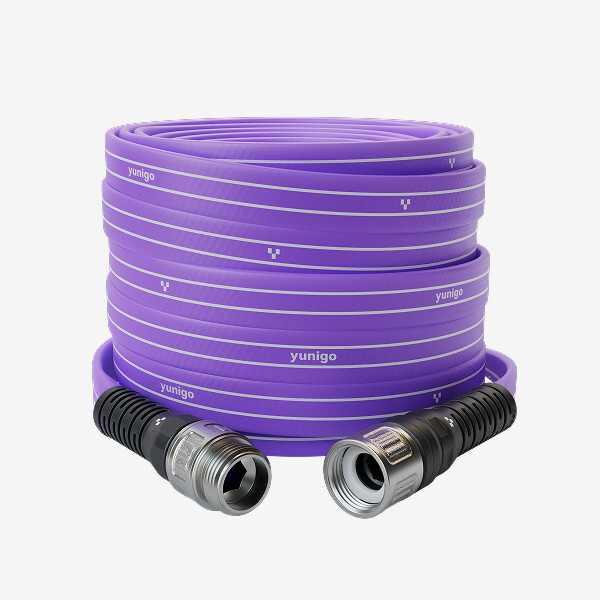
Yunigo Getaway is flat-to-round construction provides a full, round working shape during use, then collapses into a slim profile after draining. It combines potable-water practicality with lightweight handling, compact storage, kink resistance, and the durability required for docks, marinas, RV sites, and life on the move.
It is an upgrade to the entire routine: connect, fill, drain, pack, move on.
Because on a well-equipped boat, even the humble water hose should know exactly where it belongs.
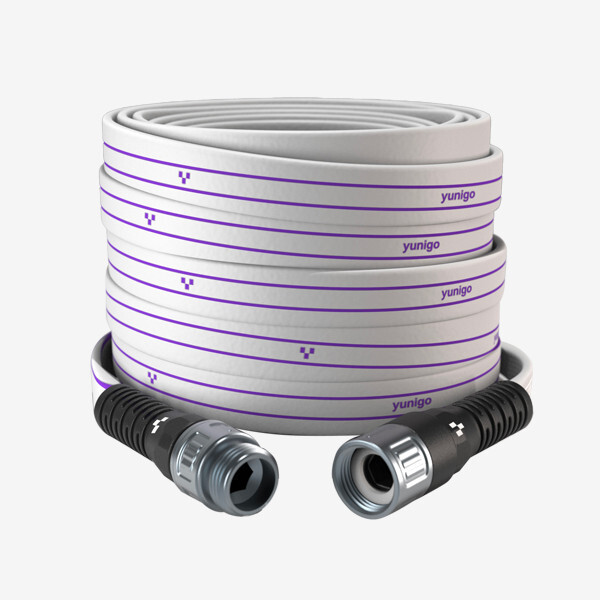
Yunigo Getaway is available in 25 ft and 50 ft lengths, while Yunigo Serenity comes in 50 ft and 100 ft lengths, offering flexible options for different onboard setups. For boat owners who need two hoses of different lengths for different uses, pairing these two models can be a practical solution: both are drinking water safe and share the same features and performance, while their different colors make them easy to identify and distinguish at a glance.
 |
 |
|
| Discover Yunigo Getaway | Discover Yunigo Serenity |