

Garden hose spray nozzle guide: patterns, uses & how to choose the right mode
April 21, 2026
Most gardeners have a favorite spray nozzle setting.
They click the nozzle once, find a spray pattern that “works well enough,” and use it for everything: seedlings, tomato beds, muddy boots, patio chairs, maybe even the car. The problem? A hose nozzle spray pattern is not just about the water’s geometry. It is a tool.
Water is simple. Watering is not.
A good garden hose nozzle helps control three things: water pressure, coverage, and flow. These three details decide whether your plants get a gentle drink or are subject to a miniature storm.
So, which spray pattern should you use?
This garden hose spray nozzle guide breaks down the most useful spray nozzle settings, what they are best for, and how to choose a nozzle that feels as good in your hand as it performs in the garden.
The most common garden hose spray patterns explained
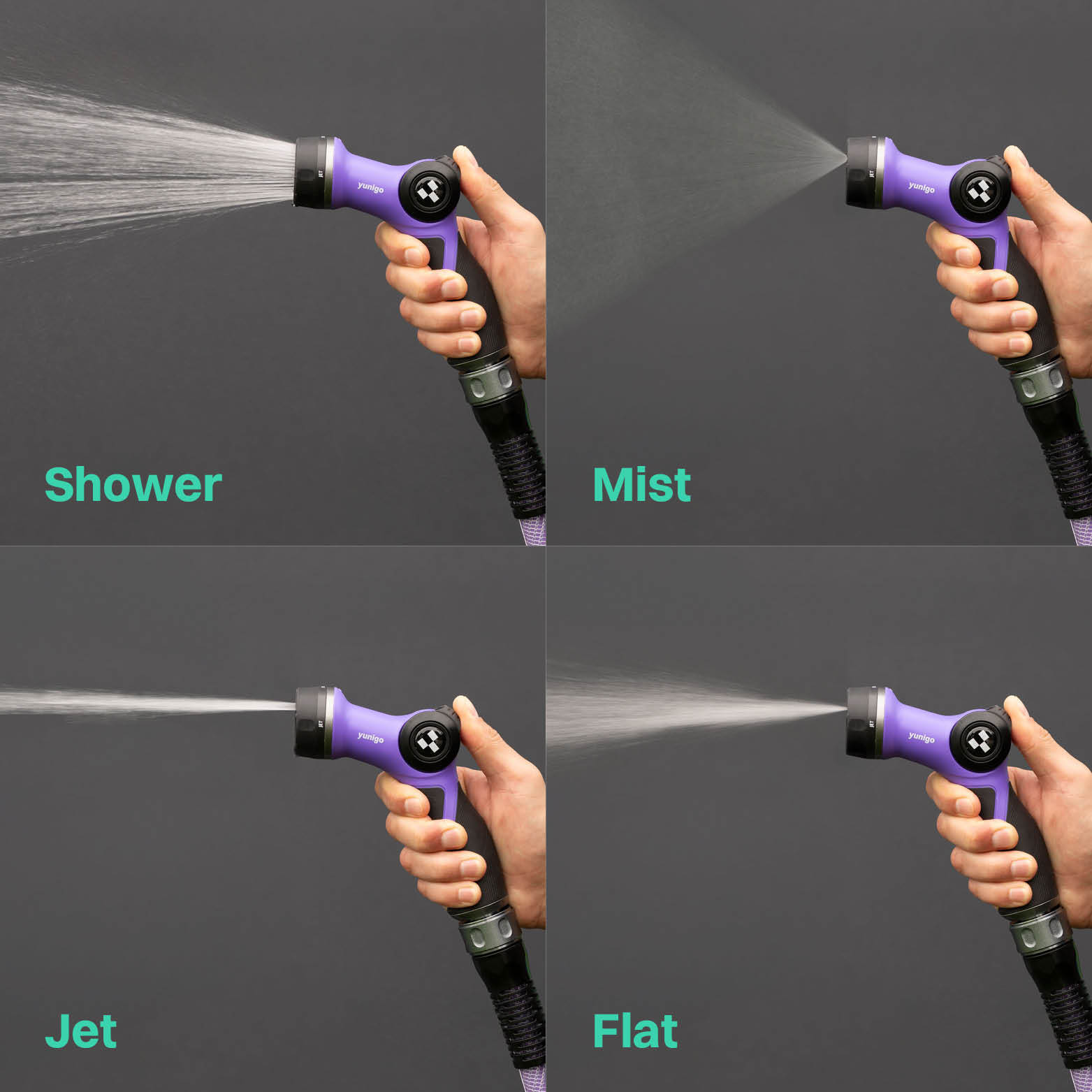
Mist Spray
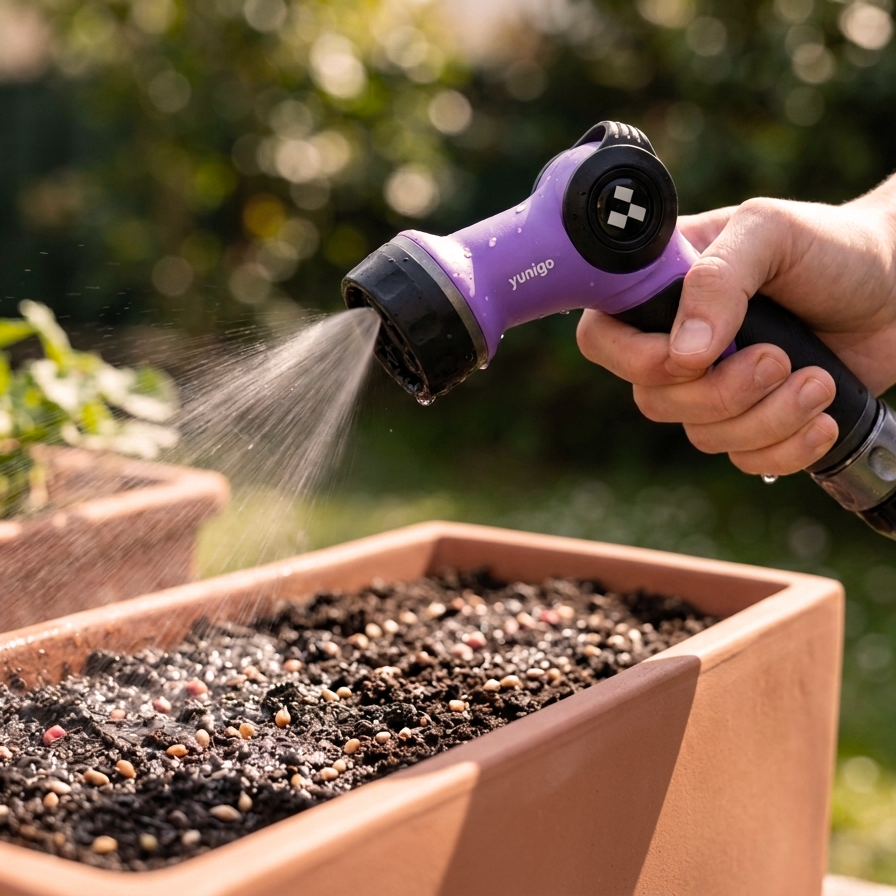
Mist is the gentlest of the common garden hose spray settings. It creates a fine, airy spray that settles lightly over leaves and soil, almost like the morning dew made visible.
Use Mist for:
- Seedlings
- Young plants
- Delicate flowers
- Greenhouse plants
- Freshly sown containers
- Propagation trays
Mist is especially useful when the soil surface is loose and vulnerable. A stronger spray can push potting mix to the edges of a tray, expose tiny roots, or knock new stems sideways. Mist keeps the top layer damp without rearranging the entire planting bed.
For anyone asking what spray nozzle setting is best for plants when those plants are young or fragile, Mist is usually the safest answer.
Best for: gentle watering, seedlings, delicate blooms
Avoid using it for: deep watering large shrubs or cleaning surfaces
Shower Spray
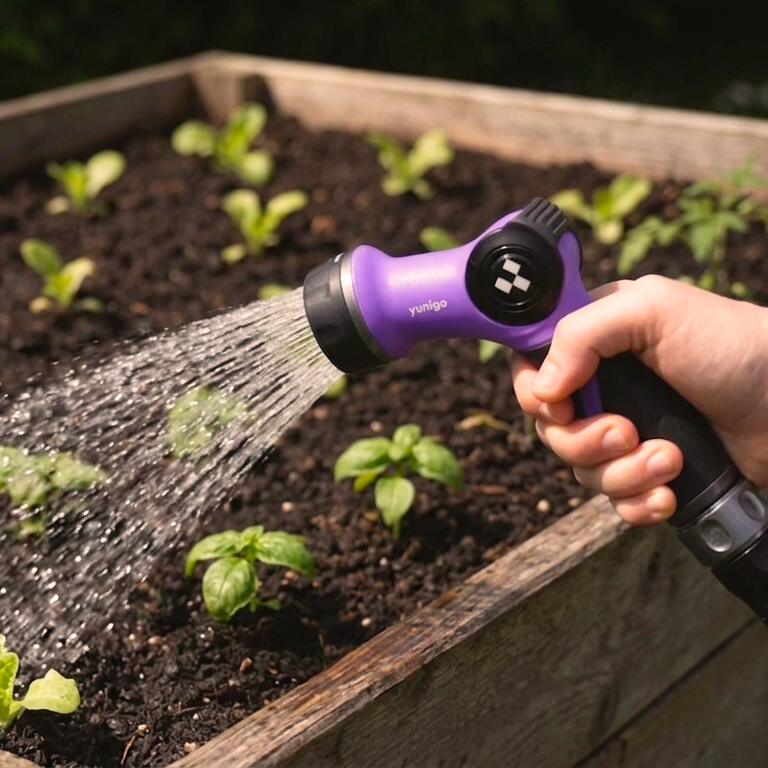
Shower is the everyday hero. It gives you a soft spray with more body than Mist, usually spread across a wide face of water droplets. It feels similar to a natural rainfall pattern: steady, calm, and forgiving.
Use Shower for:
- Flower beds
- Potted plants
- Raised beds
- Herbs
- Everyday watering
- Rinsing leaves without bruising them
This is often the best hose nozzle spray pattern for flowers because it delivers enough water to reach the root zone without hitting petals and stems too aggressively. It is also excellent for containers, where too much pressure can carve little trenches in the soil.
When in doubt, start with Shower. Watch how the soil responds. If water pools immediately, reduce the flow. If the surface stays dry, increase flow slightly or water for longer.
Best for: routine garden care, flowers, pots, herbs
Avoid using it for: heavy cleaning jobs that require force
Flat Spray
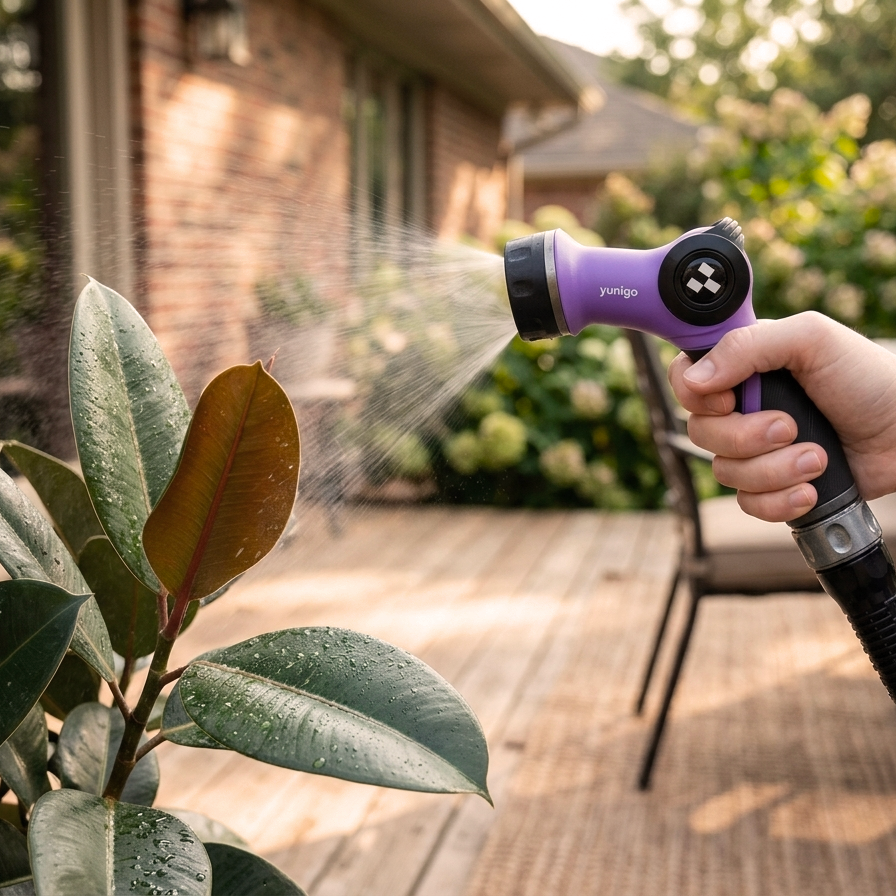
Flat spray spreads water in a broader circular pattern. It has more reach and coverage than Shower, making it useful when you want to water a larger planting area without standing in one spot for too long.
Use Flat for:
- Shrubs
- Garden borders
- Larger planting areas
- Groundcovers
- Established perennials
Flat works well when plants are mature enough to handle moderate water pressure and you need efficiency. For example, if you are watering a mixed border with ornamental grasses, salvia, and compact shrubs, Flat lets you sweep across the area smoothly instead of treating every plant like an individual patient.
It is also helpful for lawn care touch-ups, especially dry corners that sprinklers miss.
Best for: wider coverage, shrubs, borders, established beds
Avoid using it for: tiny seedlings or very delicate flowers
Jet Spray
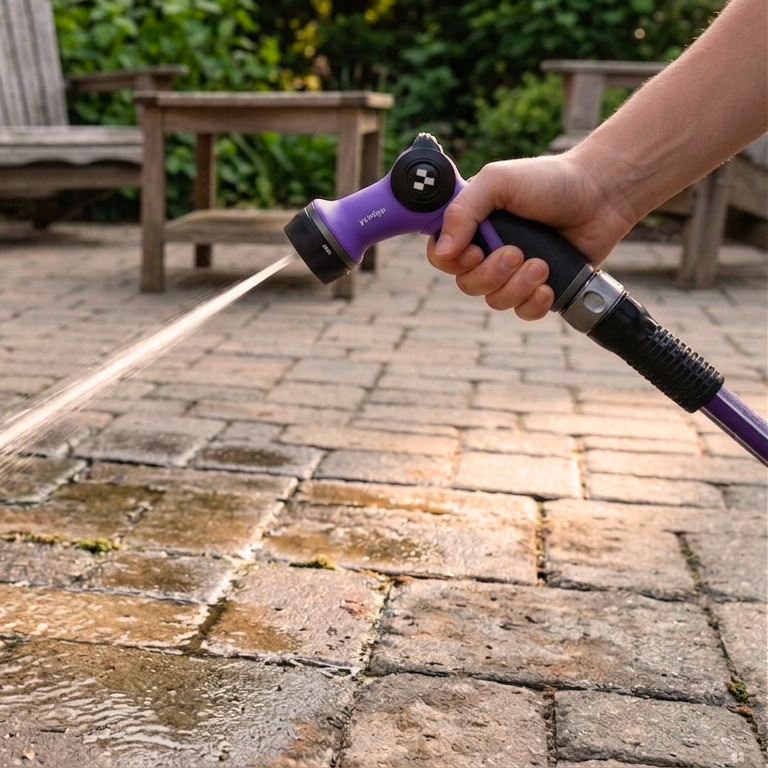
Jet is the power setting. It creates a narrow, concentrated stream of water with high pressure. In the garden, this is less of a watering mode and more of a cleaning mode.
Use Jet for:
- Patio cleaning
- Driveways
- Outdoor furniture
- Muddy tools
- Trash bins
- Wheels and stubborn dirt when washing vehicles
Jet spray is satisfying. There is no denying it. It can peel mud off a shovel handle, push debris from the grooves in the patio, and blast dried dirt from chair legs.
But for plants? Be careful. Jet is generally not suitable for watering plants.
Best for: cleaning, rinsing hard surfaces, stubborn dirt
Avoid using it for: flowers, seedlings, containers, soft garden beds
Mist, Shower, Flat or Jet: which one should I choose?
Here is the practical version. The one you can remember while standing in the yard with wet shoes and a half-watered bed.
|
Spray pattern |
Best for |
|
Mist |
Seedlings and delicate plants |
|
Shower |
Flowers, pots, and everyday watering |
|
Flat |
Shrubs, borders, and larger areas |
|
Jet |
Cleaning patios, tools, and outdoor furniture |
For most gardeners, the best garden hose nozzles are not the ones with the most settings. They are the ones with the right settings.
Four well-designed spray nozzle functions can be more useful than ten confusing ones. Flat, Shower, Mist, and Jet cover the real daily rhythm of gardening: protect, water, cover, clean.
What materials make a better hose nozzle?
A nozzle lives a tough life.
It gets dropped on stone, dragged across mulch, left in the sun, connected and disconnected with wet hands. Materials matter.
Plastic Nozzles
Plastic hose nozzles are usually lightweight and affordable. They can be adequate for quick jobs and casual use.
The trade-off is durability. Plastic threads and connectors are more likely to wear down, crack, or leak over time, especially if the nozzle is exposed to sun, cold, and repeated impacts.
Metal Nozzles
Metal nozzles usually offer better impact resistance and a longer service life. A metal connector, in particular, can make a noticeable difference because that is where leaks often begin.
The downside? All-metal nozzles can feel cold, heavy, or slippery, especially during longer watering sessions.
Hybrid Construction
This is were premium design makes a difference.
A good hybrid nozzle combines the strength of metal where it matters most with comfort where you actually use it. Look for a durable metal connector, a stable body, and an ergonomic soft grip with texture you can feel even when your hands are wet.
This is the kind of detail around which Yunigo builds its products: tools that feel ready, not fragile. A nozzle should not make you baby it. It should feel solid when it clicks into place, smooth when you adjust flow, and balanced enough that watering a full row of containers does not turn into a grip-strength workout.
Features to look for when buying a garden hose nozzle
When deciding how to choose a hose spray nozzle, first ignore gimmicks. Focus on what changes the experience in your hand and that of the plant.
Adjustable spray patterns
An adjustable spray nozzle should give you practical settings you will actually use. Mist, Shower, Flat, and Jet are the essential settings for most watering and cleaning tasks.
Flow control
Flow control lets you adjust water output without walking back to the faucet. This matters more than people think.
Ergonomic grip
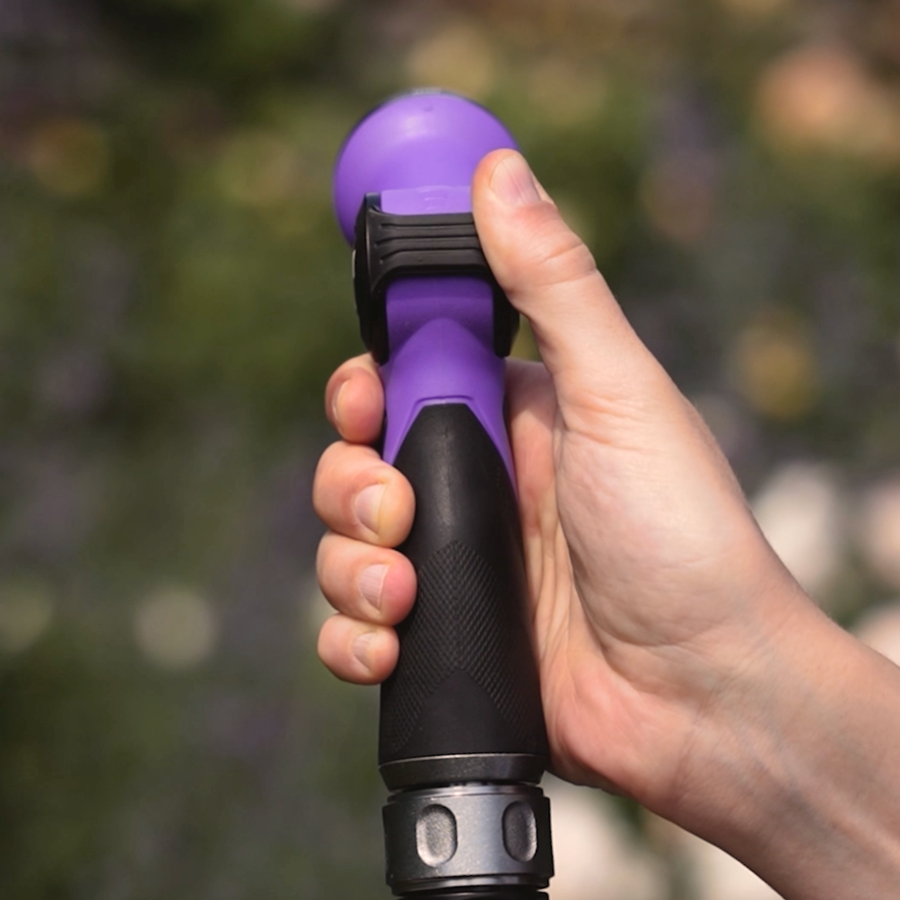
An ergonomic hose nozzle should feel stable without forcing your hand to clamp down. A soft, textured rubber handle helps reduce fatigue, especially during longer watering sessions or when your hands are wet.
Durable connections
Leaks are not just annoying. They waste water and reduce pressure where you actually need it. Look for sturdy connectors, preferably metal, that attach cleanly and hold up to repeated use.
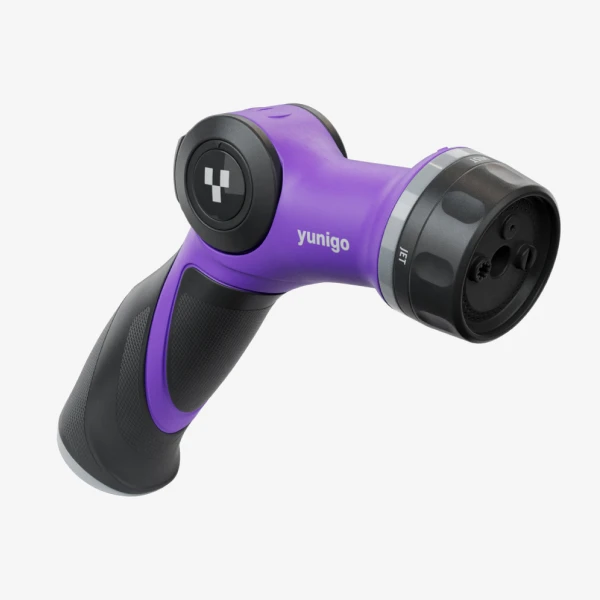
Looking for a nozzle that covers everyday watering and cleaning without unnecessary clutter? The Yunigo Spray Nozzle combines four essential spray patterns, ergonomic comfort, distinctive purple design, and durable construction in one versatile tool.
It also comes as part of every Yunigo hose kit, so each hose is paired with a nozzle designed to complete the watering experience from the start.
It is not just about spraying water.
It is about watering with intention.
 |
||||
| Discover the Yunigo Spray Nozzle |